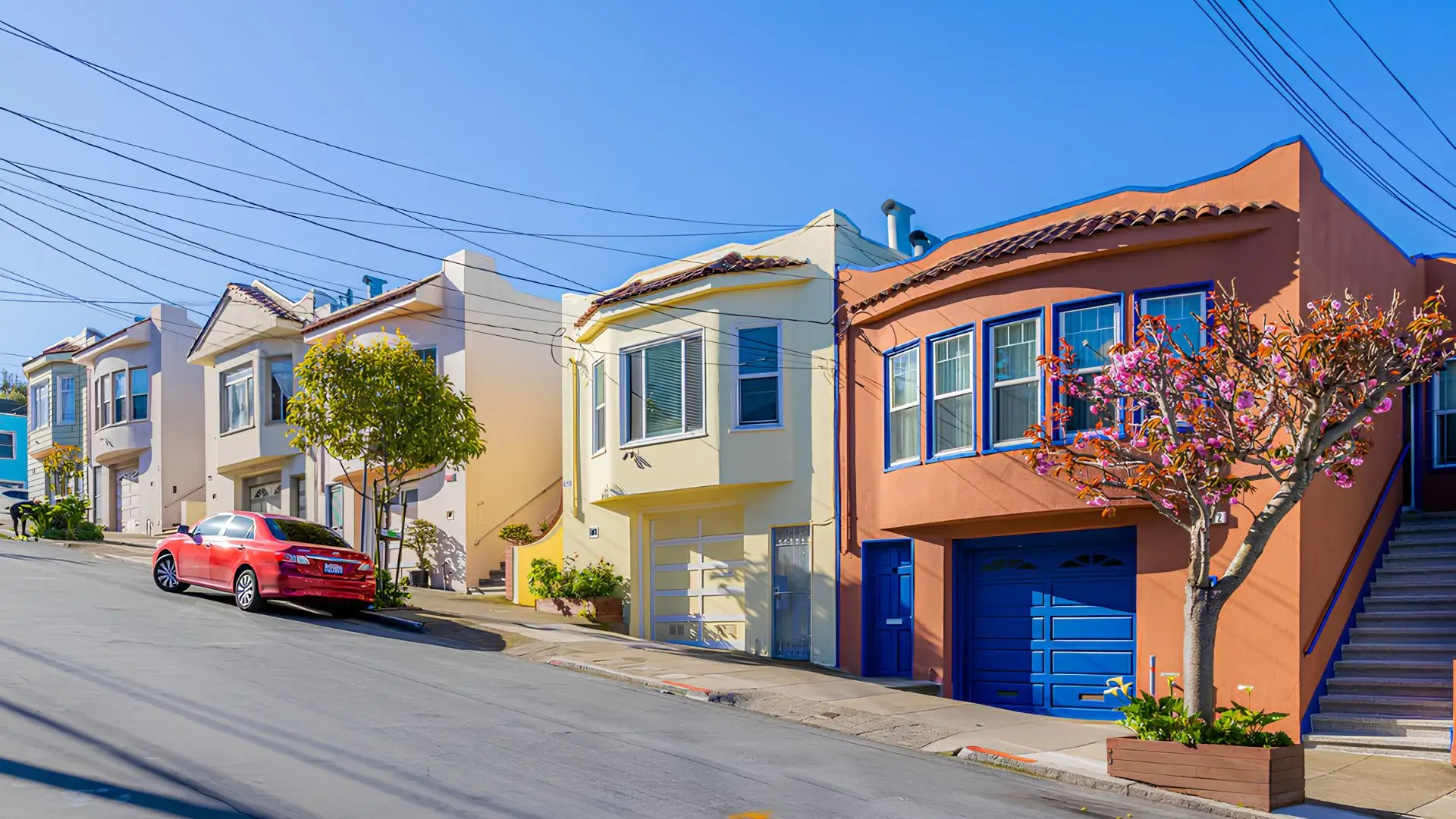
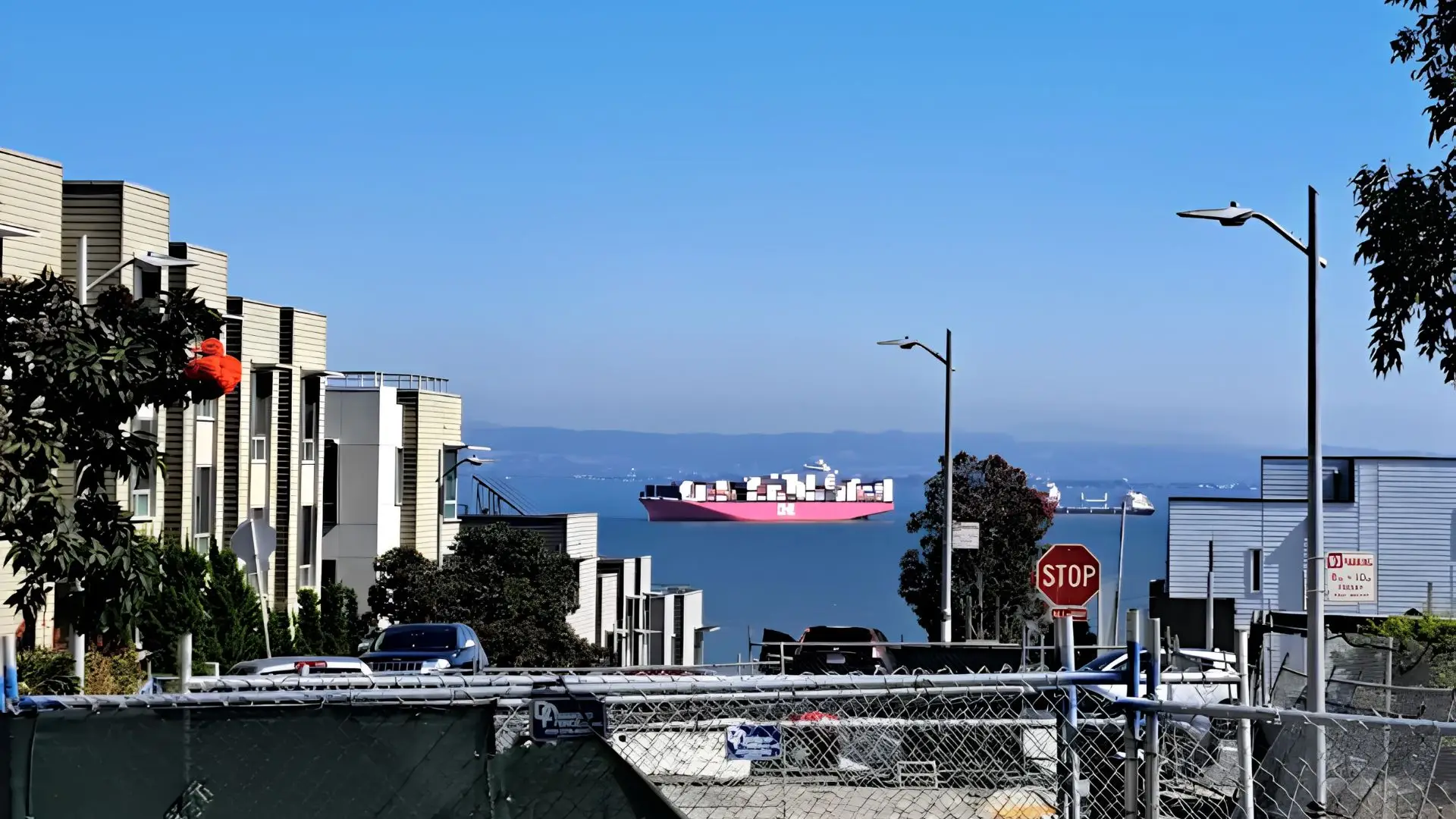
Nestled in the heart of San Francisco, Noe Valley is a vibrant and family-friendly neighborhood known for its charming residential streets, strong sense of community, and livable urban atmosphere. The area offers a unique blend of comfort and convenience, making it a highly desirable location for families, professionals, and long-term residents alike.
Noe Valley features a mix of Victorian and Edwardian homes, updated single-family residences, and condominiums, reflecting both historic architecture and modern urban living. With its walkable streets, accessible public transportation, local boutiques, parks, and welcoming neighborhood feel, ZH Group highlights Noe Valley as one of the most sought-after residential areas in San Francisco, offering valuable insights for those exploring housing trends and real estate opportunities in the city.
Noe Valley, San Francisco: Historical Background and Neighborhood Evolution
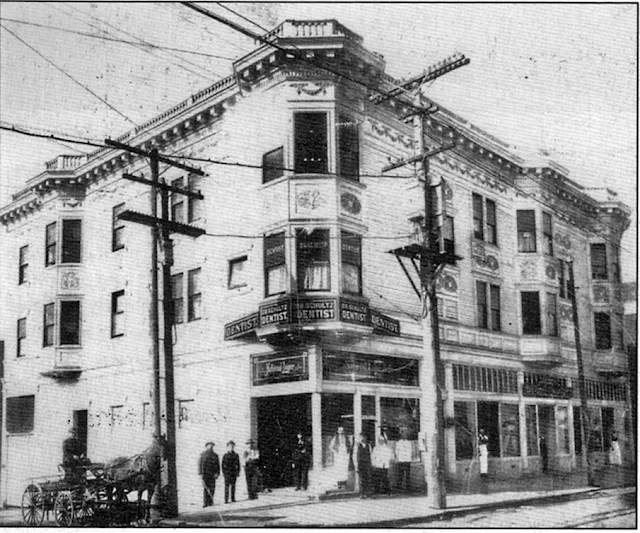
The corner of Twenty-fourth Street and Church Street was the center of the business district in Noe Valley when this picture was taken in 1878.
The history of Noe Valley in San Francisco traces back to the mid-19th century, when the land was originally owned by José de Jesús Noé, the last Mexican mayor of Yerba Buena. In 1854, the property was sold to John Meirs Horner, who subdivided the area into what became known as “Horner’s Addition,” laying the foundation for the neighborhood’s early development. Initially rural, the area included farms, ranches, and even quarry sites that operated into the early 20th century, reflecting its agricultural and industrial beginnings.
Noe Valley experienced rapid residential growth in the late 19th and early 20th centuries, particularly after the 1906 San Francisco Earthquake, when displaced residents moved into the area and spurred development. This period gave rise to the neighborhood’s iconic Victorian and Edwardian homes, many of which still define its streetscape today. Over time, Noe Valley evolved from a working-class community into a highly desirable residential district, shaped by waves of redevelopment and demographic shifts. Today, it retains its historic charm while continuing to grow as a vibrant, family-oriented neighborhood with deep architectural and cultural roots.
Source: mishaloy
Daily Life in Noe Valley, San Francisco
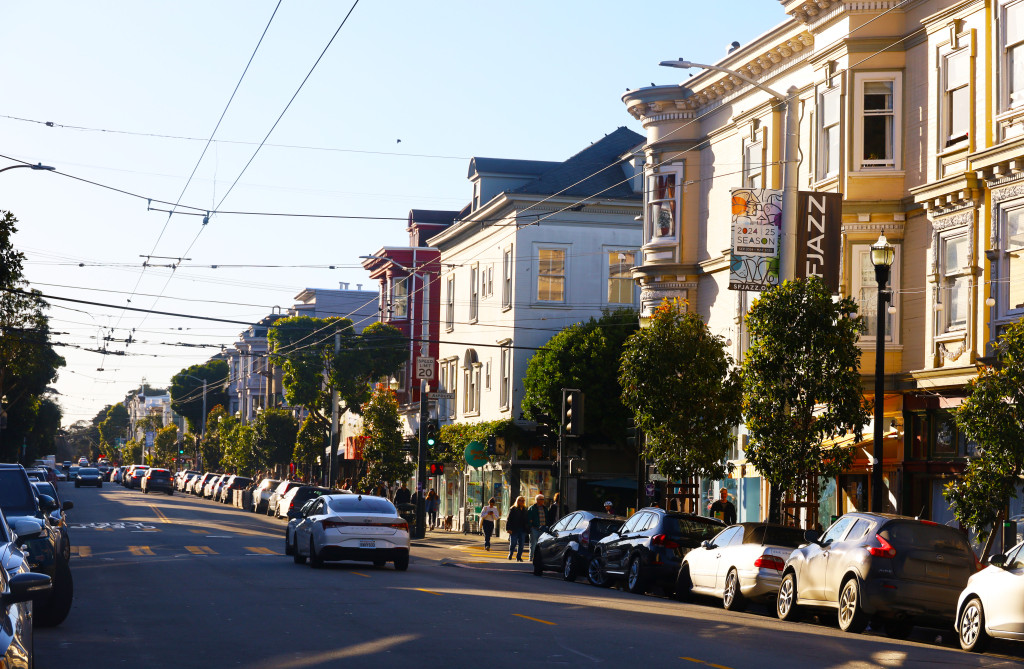
24th Street, Noel Valley
Daily life in Noe Valley in San Francisco is defined by a relaxed, village-like atmosphere that blends urban convenience with a slower, more residential pace. Mornings often begin along 24th Street, the neighborhood’s main hub, where locals run errands, grab coffee, and shop at small, independently owned stores. The area is highly walkable, with most daily essentials, groceries, bakeries, and boutiques, just a short stroll away, creating a routine that feels both easy and community-centered.
Throughout the day, the neighborhood maintains a calm, family-friendly rhythm, with tree-lined streets filled with strollers, dog walkers, and residents enjoying the sunny microclimate that sets Noe Valley apart from foggier parts of the city. Weekends bring more activity, especially along 24th Street, where locals gather at farmers markets, dine at neighborhood restaurants, and connect with the community. Despite its peaceful feel, Noe Valley remains well-connected to the rest of San Francisco, offering a balanced lifestyle that combines comfort, accessibility, and a strong sense of neighborhood identity.
Source: berkeleyhighschooljacket
Location, Boundaries, and Neighbors in Noe Valley: A Neighborhood Overview
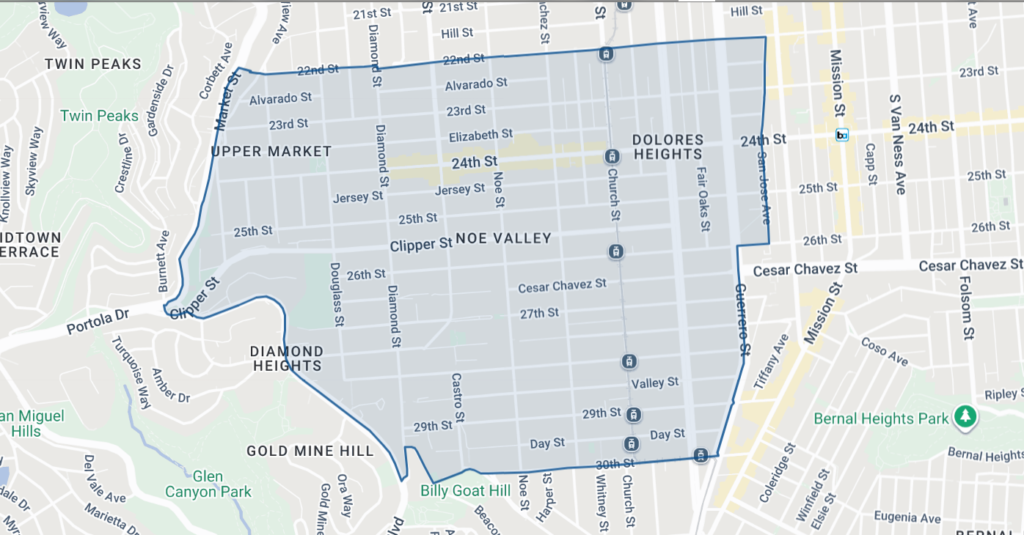
Noe Valley in Google Maps
Noe Valley is a centrally located residential neighborhood in San Francisco, nestled in a valley protected by the hills of Twin Peaks. Known for its sunnier-than-average microclimate, the area stands out as one of the city’s most desirable neighborhoods for families and professionals seeking a balance of comfort, accessibility, and scenic surroundings. Its central position allows for convenient access to multiple districts while maintaining a quiet, community-focused atmosphere.
The neighborhood’s boundaries are generally defined by 21st or 22nd Street to the north, 30th Street or Randall Street to the south, Dolores Street, Guerrero Street, or San Jose Avenue to the east, and Grand View Avenue along with Diamond Heights Boulevard to the west. Noe Valley is surrounded by several distinct neighborhoods, including The Castro to the north, Mission District to the east, Glen Park to the south, and Diamond Heights and Twin Peaks to the west, with Dolores Heights to the northeast. This strategic location makes Noe Valley a well-connected hub within San Francisco’s diverse urban landscape.
Source: homes
Noe Valley Real Estate Trends 2026
The Noe Valley housing market in San Francisco remains a high-demand, strong seller’s market in early 2026. Limited inventory continues to drive competition, with many properties selling quickly and often above asking price. This fast-paced environment reflects sustained buyer interest in Noe Valley’s residential appeal, walkability, and family-friendly atmosphere.
Market activity has also been influenced by renewed buyer confidence, partly fueled by wealth generated from the tech sector and emerging industries such as AI. As a result, well-located and move-in-ready homes attract multiple offers, reinforcing Noe Valley’s position as one of the most competitive and desirable real estate markets in San Francisco.
Source: colleencottersf
Long-Term Growth and City Planning Projects in Noe Valley: Future Developments and Opportunities
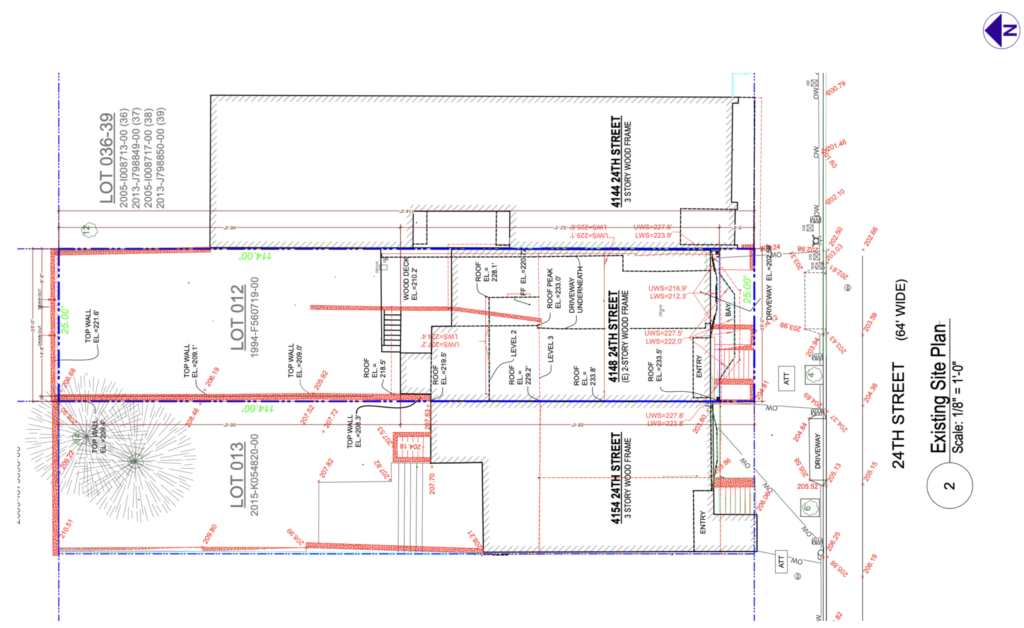
24th street Existing Site Plan, Noe Valley
Future development in the Noe Valley continues to focus on small-scale residential growth that aligns with the neighborhood’s established character while addressing housing demand. A notable example is the proposed project at 4148 24th Street, where plans call for the demolition of an existing structure to make way for a four-story residential building with seven new dwelling units and on-site bike parking. This type of infill development reflects a broader trend in Noe Valley—prioritizing thoughtfully designed, low-rise housing that integrates into the neighborhood’s walkable, village-like environment.
Beyond a single project, this proposal highlights a larger planning direction centered on incremental density, modernized housing stock, and sustainable urban living. With new buildings designed to maximize limited lot space while maintaining neighborhood scale, Noe Valley continues to evolve without losing its residential charm. These targeted developments present opportunities for buyers and investors seeking updated housing options in a high-demand area, while also supporting the city’s long-term goals of increasing housing supply in well-established, transit-accessible neighborhoods.