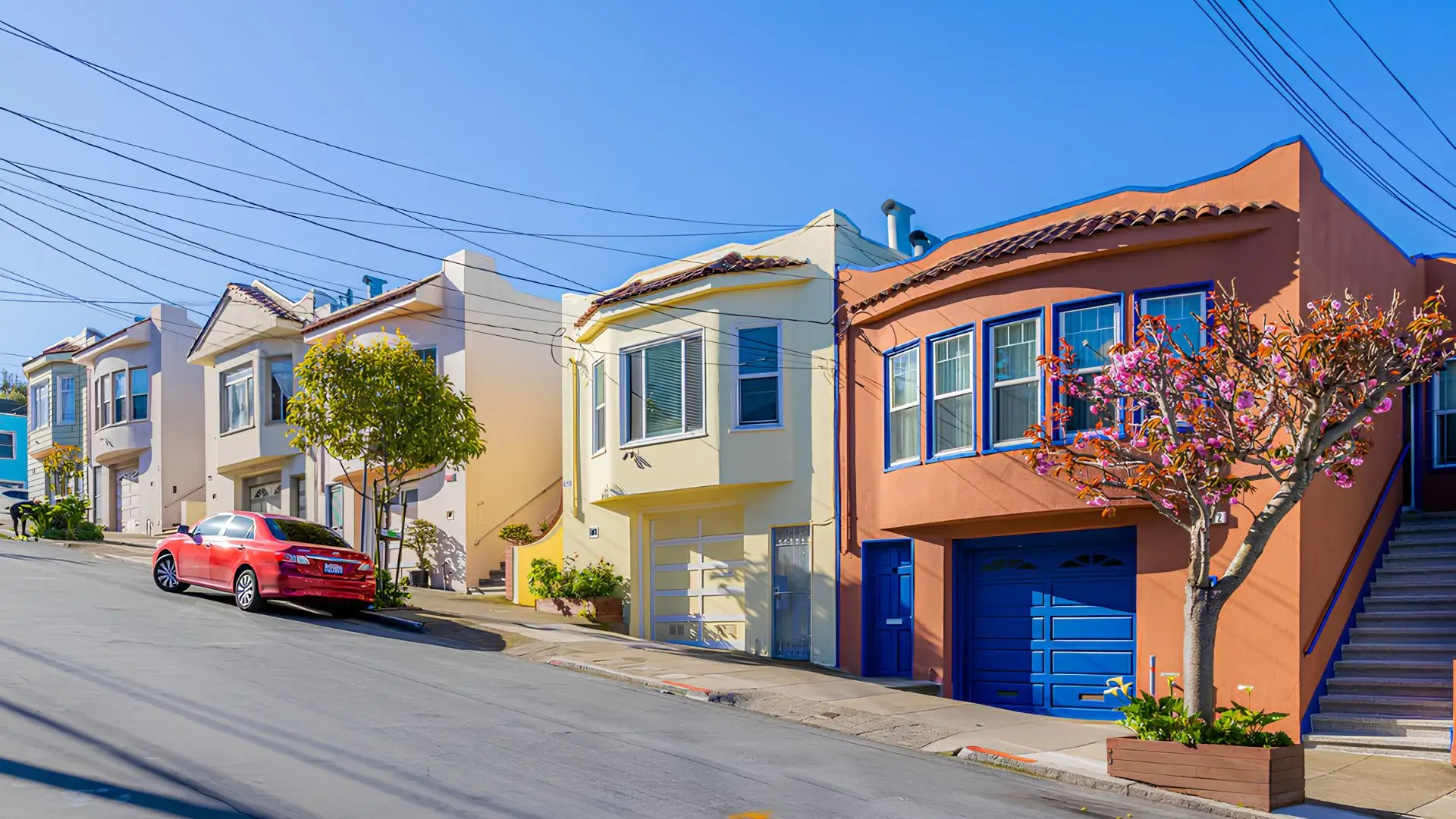
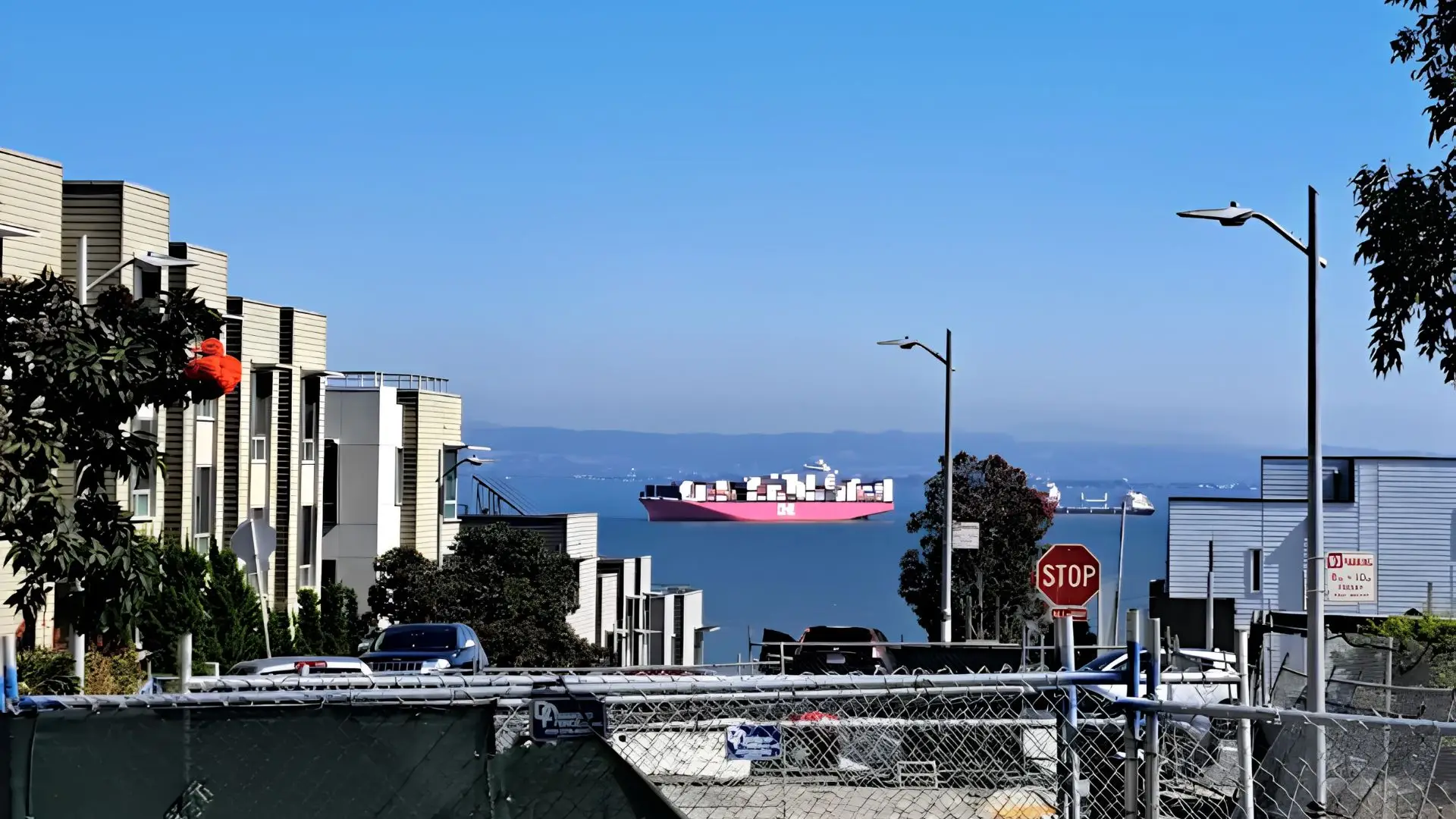
The Ingleside District in San Francisco is a diverse and growing neighborhood known for its residential appeal, cultural diversity, and convenient city access. Popular among families and professionals, Ingleside offers a balance of affordability, community atmosphere, and accessibility, making it an increasingly attractive option for those looking to live or invest in San Francisco real estate.
In this 2026 neighborhood guide by ZH Group, discover everything you need to know about Ingleside, including its location, housing options, local amenities, restaurants, parks, and lifestyle highlights. Whether you’re a homebuyer, renter, or investor, this guide is designed to help you explore the Ingleside District and make informed decisions about living in one of San Francisco’s emerging residential communities.
Location, Boundaries, and Neighbors in Ingleside Districts: A Neighborhood Overview
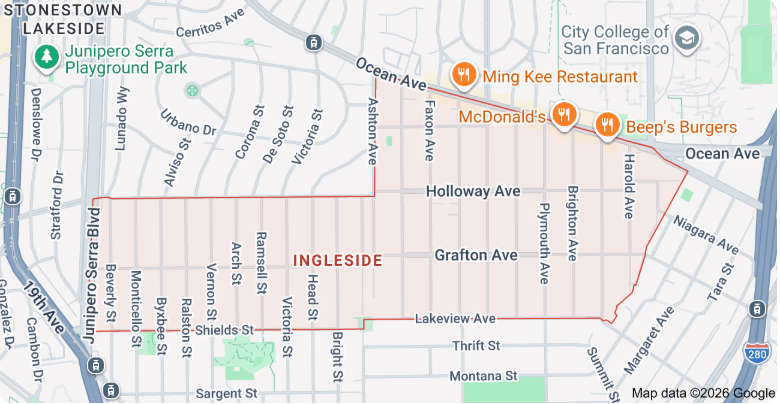
Ingleside District, San Francisco/ Googlemaps
The Ingleside District is a large, primarily residential neighborhood located in the southwestern quadrant of San Francisco. Known for its relatively sunny microclimate compared to the nearby Sunset District, Ingleside offers a comfortable living environment with a diverse community and convenient access to surrounding areas. Positioned about six miles southwest of Downtown San Francisco, the neighborhood sits on a gentle slope, giving many homes scenic views of the Pacific Ocean or the city skyline.
In terms of boundaries, Ingleside is generally defined by Holloway Avenue and the southern edge of Mount Davidson to the north, Lakeview Avenue to the south, San Jose Avenue and Interstate 280 to the east, and Junipero Serra Boulevard and Ashton Avenue to the west. It is bordered by nearby neighborhoods such as Oceanview to the south, making it a well-connected district with easy access to major roads and neighboring communities while maintaining its quiet, residential character.
Exploring the History of San Francisco’s Ingleside District
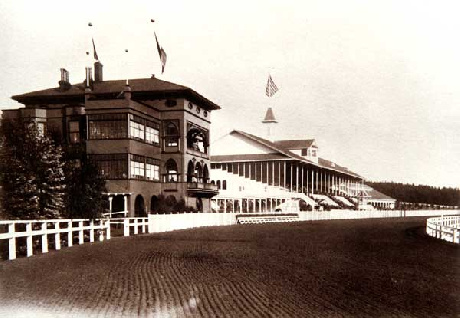
Ingleside Racetrack showing clubhouse and grandstand, 1895
The history of the Ingleside District in San Francisco is a layered story of transformation, from rural countryside to a thriving residential neighborhood shaped by recreation, disaster, and urban planning. In the late 1800s, the area began to develop around the Ingleside Inn, a roadhouse established in 1885 by Cornelius Stagg. The name “Ingleside,” derived from a Celtic term meaning “beside the fire,” reflected its role as a warm refuge in a foggy landscape. Soon after, the Ingleside Racetrack opened in 1895, becoming a premier destination for horse racing and social gatherings, even hosting notable figures like Wyatt Earp. By 1900, it also made history as the site of California’s first automobile race.
Following the 1906 San Francisco Earthquake, the racetrack was repurposed into the Ingleside Model Camp, providing shelter for thousands of displaced residents. In the years that followed, the area transitioned into a planned residential community. In 1910, developer Joseph Leonard transformed the former racetrack into Ingleside Terraces, one of the city’s early “residence parks,” preserving the original track layout as Urbano Drive. A notable landmark from this era is the Ingleside Sundial, built in 1913 and once considered the largest in the world, which still stands today as a symbol of the district’s rich and evolving history.
Long-Term Growth and City Planning Projects in Ingleside District: Future Developments and Opportunities
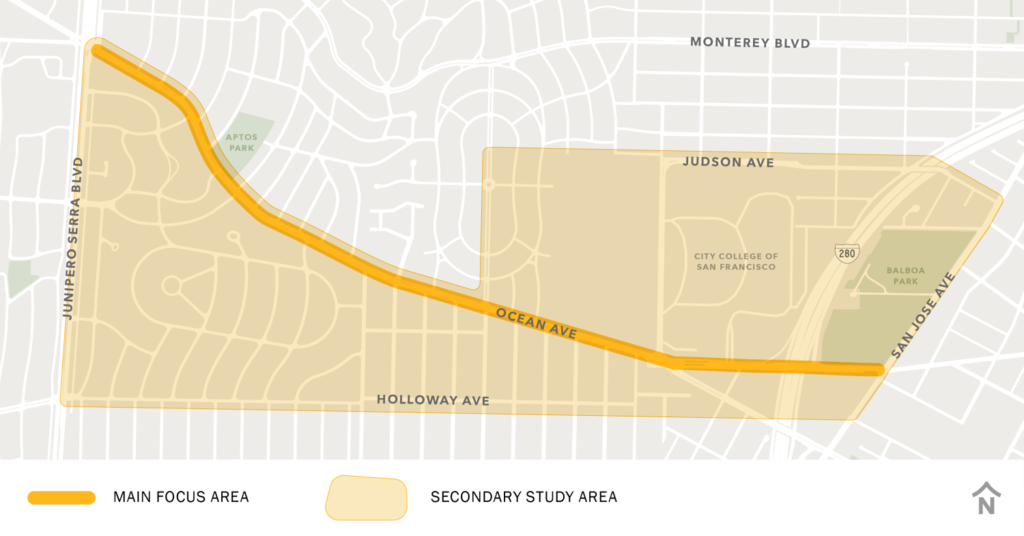
Ocean Ave, Ingleside
The Ingleside District in San Francisco is undergoing a multi-year transformation aimed at increasing housing density and improving overall urban connectivity. As part of the city’s broader planning strategy and state-mandated housing targets, Ingleside is being positioned as a key area for residential growth, creating new opportunities for homeowners, renters, and real estate investors alike.
A major driver of this development is the Ocean Avenue Mobility Action Plan, which focuses on enhancing transit efficiency, pedestrian safety, and streetscape improvements along one of the district’s main corridors. These upgrades are expected to support local businesses, improve accessibility, and make the neighborhood more walkable and transit-friendly. Together, these initiatives highlight Ingleside’s long-term potential as a growing residential hub with strong infrastructure and community-focused development.
Source: sfcta
Ingleside District Real Estate Trends 2026
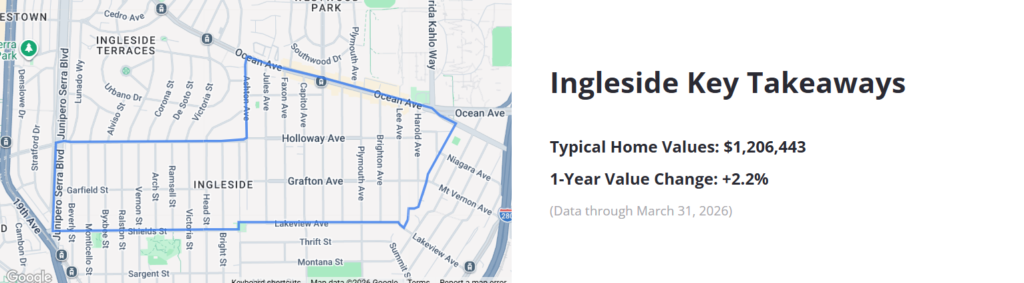
Ingleside, CA Housing Market/ Redfin
The Ingleside District continues to show steady real estate performance in 2026, making it an appealing option for both homeowners and investors seeking value within San Francisco. Based on the latest market data, the typical home value in Ingleside is approximately $1,206,443, reflecting the neighborhood’s strong residential demand and long-term desirability. Compared with many central San Francisco neighborhoods, Ingleside offers a balance of space, accessibility, and relative affordability, helping sustain buyer interest.
Over the past year, home values in Ingleside have increased by 2.2%, signaling stable appreciation and continued confidence in the local market. This growth is supported by the district’s convenient transit access, family-friendly atmosphere, and proximity to Ocean Avenue shopping, Balboa Park BART, and nearby schools. For buyers looking for long-term upside and sellers benefiting from rising values, Ingleside remains a solid real estate market in 2026.
Source: zillow